
All-Electric New Homes in Victoria: Gas Rules and 7-Star in 2026
If you are planning a new home in Victoria right now, two sets of rules decide what goes into it. One is about energy efficiency: the 7-star rating and the whole-of-home energy budget. The other is about gas, and it changes again on 1 January 2027.
A lot of what gets said about both is out of date or half right. People still ask if they can squeeze a gas connection in by moving quickly, or assume 7 stars means double glazing and a battery. Neither is quite true. This is what the rules actually say, what they mean for a build being designed in late 2026, and where the real trade-offs are.
The short answer
Since 1 January 2024, a new home that needs a planning permit (with the application lodged on or after that date) cannot connect to reticulated gas. From 1 January 2027, Victoria's Building Electrification Regulations go further: any new home, including a full knockdown rebuild, must be built all-electric if its building permit is issued on or after that date, whether or not it needed a planning permit.
Separately, every new Victorian home has had to meet a minimum 7-star NatHERS rating and a whole-of-home energy budget since 1 May 2024. Victoria adopted NCC 2025 on 1 May 2026, but residential energy requirements did not change, and Building Ministers have paused further residential changes until mid-2029.
In practice, a home designed today should be planned all-electric from the first sketch: heat pump hot water, induction cooking, reverse-cycle heating and cooling, and usually rooftop solar.
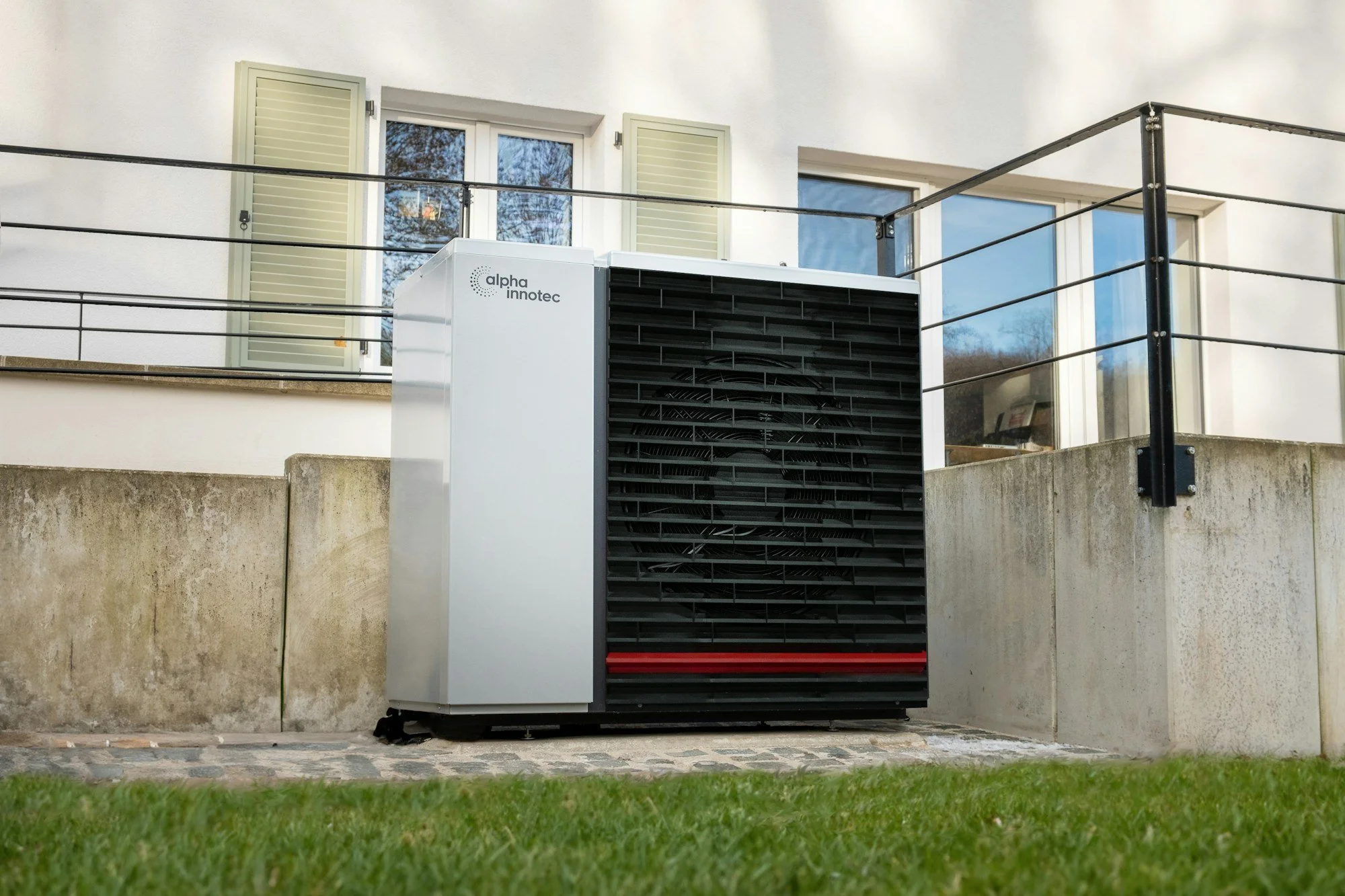
From 2027 every new Victorian home is all-electric, so the roof, the switchboard and the plant locations get planned from the first sketch.
The dates that matter
| Date | What changed | Who it applies to |
|---|---|---|
| 1 January 2024 | Amendment VC250 (clause 53.03) stops planning permits allowing new gas connections | New dwellings, apartments and residential subdivisions where the planning permit application is lodged on or after this date |
| 1 May 2024 | 7-star NatHERS minimum and whole-of-home energy budget become mandatory in Victoria | New homes |
| 1 May 2026 | NCC 2025 adopted in Victoria, with no change to residential energy efficiency | Projects designed after this date |
| 1 January 2027 | Building Electrification Regulations: no new gas connection or gas appliances in new buildings | Building permits issued on or after this date, including knockdown rebuilds |
| 1 March 2027 | Gas hot water that fails and cannot be repaired must be replaced with an electric system | Existing homes |
What the 2027 gas rules actually ban
The regulations stop a building surveyor issuing a permit for a new building with a proposed new gas connection. They also prohibit installing gas appliances for cooking, space heating or water heating during construction, and prohibit connecting an existing building that has never had gas.
The transition. If a building permit is issued before 1 January 2027, or the relevant building surveyor certifies in writing that substantial progress was made on the design before that date, the building may still be connected to gas. That second path is the surveyor's call, so do not design around it.
What is not covered. LPG, or bottled gas, sits outside the regulations. A bottled-gas barbecue on the deck is fine.
Knockdown rebuilds. The Victorian Government's guidance names full knockdown rebuilds specifically. If you demolish and rebuild, the new house must be all-electric and cannot reconnect to gas, even though the old house had a meter. Renovations and extensions are different: you can keep an existing gas connection, and only a failed gas hot water system has to be replaced with electric from 1 March 2027.
What 7-star actually measures
NatHERS rates the building shell, meaning insulation, glazing, orientation and construction, out of 10 stars. Victoria's minimum rose from 6 to 7 stars. For context, the Victorian Government says homes built before 2005 average less than 2 stars, which is the house many knockdown rebuild clients are living in now.
Getting to 7 stars is mostly a design job. The government lists better orientation and shading, improved ceiling, wall or underfloor insulation, and higher-performing glazing. Double glazing is not mandatory, and a well-oriented home may reach 7 stars with some single glazing. The same 2024 changes removed Victoria's old requirement for a solar hot water system or rainwater tank on new homes.
Melbourne's climate. Melbourne sits in NCC climate zone 6, mild temperate. NatHERS is finer grained, with 69 local climate zones. Victorian planning schemes list several around Melbourne, including zone 21 (Melbourne) and zone 62 (Moorabbin), and planning material from south-east councils such as Bayside and Glen Eira refers to zone 62. Your energy rater sets the zone from your postcode, and the same design can score differently in different zones.
The rating is done in accredited NatHERS software: AccuRate Home, BERS Pro, Hero or FirstRate5. Our earlier piece on designing a future-proof custom home covers the case for aiming above the minimum.
The whole-of-home energy budget
This is the part most people have not heard of. Since 1 May 2024, a new home also has to meet an annual energy budget for its fixed appliances: heating and cooling, hot water, lighting, and pool and spa pumps. Plug-in appliances and the cooktop are not part of it.
Using the NatHERS pathway, a house needs a whole-of-home rating of at least 60 out of 100. There is also an elemental pathway that calculates the home's energy use against a budget set by floor area and location. Either way, the budget can be met through efficient appliances, rooftop solar to offset the remainder, or a mix.
Rooftop solar is not mandatory under these rules. It is simply the easiest way to close a gap if the appliance choices alone fall short. The national code itself is fuel-neutral, but from 2027 Victoria's electrification rules settle the fuel question for new homes anyway.
What an all-electric new home needs in practice
Hot water. A heat pump system is the usual choice. The government estimates efficient electric hot water saves up to $400 a year compared with gas. Plan where the outdoor unit goes early, because it needs airflow and makes some noise, so it should not sit under a bedroom window or a neighbour's.
Cooking. Induction, in almost every case. It usually needs a dedicated circuit sized for the cooktop, which is a decision for the electrical plan, not the kitchen fit-out.
Heating and cooling. Reverse-cycle air conditioning, either ducted or as split systems, or a combination. Heating and cooling come standard in every KGN home, so the conversation with our clients is about the right system, zoning and outdoor unit locations rather than whether to include it.
Solar and batteries. Solar helps meet the whole-of-home budget and cuts running costs. A battery is optional, and worth pricing against your actual usage pattern rather than assumed.
EV charging. According to the Victorian Government's electrical capacity guide, a dedicated 7.2 kW charger can run on a 63-amp single-phase connection. Only 22 kW fast chargers need three-phase.
These choices land at the electrical selection appointment at our K Studio showroom, which is the right time to settle circuits, switchboard space and the EV charger point.
Switchboards, supply capacity and three-phase
The Victorian Government's guide on electrical capacity makes a few points worth knowing before you assume you need an upgrade:
- Most houses with a 40 or 63-amp single-phase supply can run a full set of all-electric appliances.
- You do not usually need three-phase for induction cooking, a heat pump hot water system, or a typical rooftop solar system.
- Three-phase is mainly for very high demand, three-phase solar systems built for high exports, or 22 kW EV chargers.
- For a new home, adding three-phase during construction may be more affordable than doing it later, and can be worth considering.
For a knockdown rebuild, the new house gets a new switchboard anyway, so this is a design decision rather than a retrofit headache. The question is if your household's future loads, such as two EVs or a large pool, justify three-phase from day one.
Running costs and rebates in 2026
The Victorian Government's modelling puts the saving for a new all-electric home at about $990 a year compared with a dual-fuel home without solar, or $1,920 a year with solar installed. These are modelled averages, and your result depends on tariffs, household size and how much solar power you use during the day. Part of the saving is structural: one energy bill and one supply charge instead of two.
Solar panel rebate. Solar Victoria offers up to $1,400 (up to 50 per cent of installation costs), plus an optional interest-free loan of the same amount, and homes under construction are eligible. From 1 July 2026, combined household taxable income must be under $150,000, the property must be valued under $3 million when complete, and installation for a home being built must happen within 270 days of approval. You apply while the house is being built, with your builder's consent to the install.
Hot water rebate. Not available for homes under construction. You may become eligible once the home is complete.
Reverse-cycle discount. Under the Victorian Energy Upgrades program, new homes can access a discount for installing a reverse-cycle air conditioner, typically $70 to $140.
Federal support. Small-scale Technology Certificates reduce the price of solar panels, solar hot water and heat pump hot water systems. The federal Cheaper Home Batteries Program offers a discount of around 30 per cent on eligible batteries from 5 to 100 kWh, with the support levels adjusted from 1 May 2026.
For how these items fit into an overall budget, see our guide to the cost to build a custom home in Melbourne.
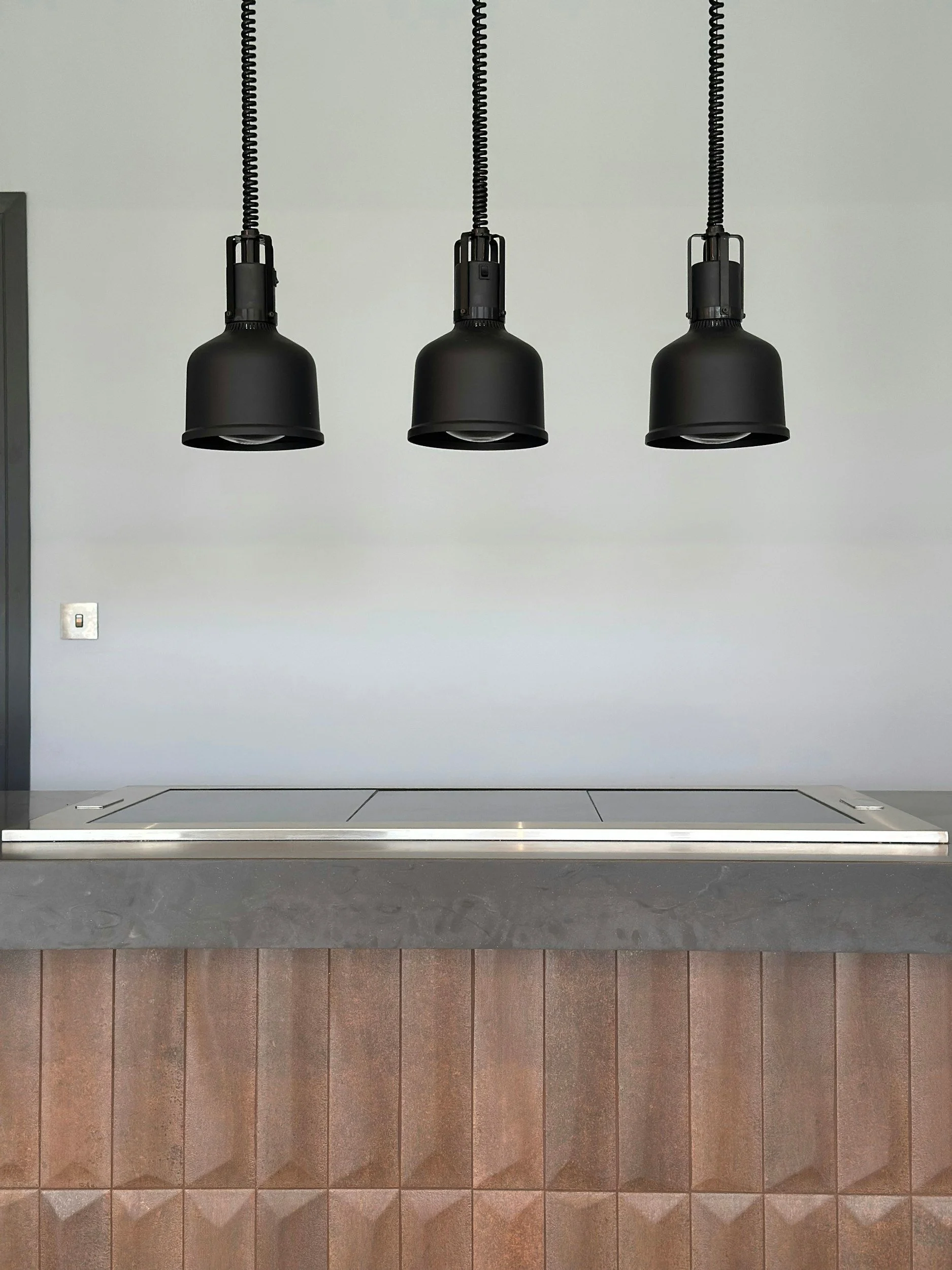
Induction is the default in an all-electric home, and the circuit for it gets decided at the electrical selection, not when the cabinets go in.
The honest trade-offs
Induction takes a few weeks to learn. It is fast and precise, but there is no flame, and some older pans will not work on it. Most people who cook seriously adjust quickly. If you want flame for a wok, an LPG burner outdoors is still permitted.
Reverse-cycle heating feels different from gas ducted. It heats with warm air from an outdoor heat pump, and comfort depends heavily on the envelope, the zoning and correct sizing. A 7-star shell does a lot of the work here, which is the point of having both rules.
Outdoor units need a home. Heat pump hot water and air conditioning condensers take up space and make noise. On a narrow south-east block with side setbacks, their placement needs to be drawn, not left to the installer.
Electrical design matters more than it used to. Every load in the house is now electric, so the switchboard, circuit layout and supply capacity deserve the same attention as the kitchen layout.
Knockdown rebuilds: dealing with the old gas meter
If you are planning a knockdown rebuild, the old house's gas service has to be dealt with before demolition, and the new house will not reconnect to it if its permit is issued from 2027.
Abolishment versus disconnection. A disconnection locks or plugs the meter and leaves live gas in the service line on your property. An abolishment cuts and caps the service in the street and removes the meter, so no live gas remains inside the boundary. For a demolition, abolishment is the clean option.
Who to call. If you hold a gas account, the request goes through your retailer. Across much of southern and eastern Melbourne the distributor is Multinet, which accepts a building permit as evidence a property is vacant and aims to complete requests within 20 business days of receiving documents and payment. The regulated charge for a service abolishment is a few hundred dollars.
Timing. Lodge the abolishment early. A demolition date that waits on a gas crew is one of the avoidable delays in a rebuild. Our building permits guide explains how the permit sequence fits around it.
Common questions
Can I still get gas in a new home in Victoria?
Only if the building permit is issued before 1 January 2027, or a building surveyor certifies that substantial progress was made on the design before then, and the home did not need a planning permit lodged after 1 January 2024. For a home being designed now, plan on all-electric.
Does a knockdown rebuild have to be all-electric?
Yes, if the building permit is issued on or after 1 January 2027. The Victorian Government's guidance specifically includes full knockdown rebuilds, and the new home cannot reconnect to the old gas service. Renovations and extensions can keep an existing connection.
When did 7-star become mandatory in Victoria?
1 May 2024. From that date new homes have needed a minimum 7-star NatHERS rating plus a whole-of-home energy budget for fixed appliances. NCC 2025, adopted in Victoria on 1 May 2026, did not change these residential requirements.
Is solar mandatory on a new home in Victoria?
No. Solar is not required, but it can offset the energy use of heating, cooling, hot water, lighting and pool pumps to help meet the whole-of-home budget. Many all-electric designs use it because it is the simplest way to reach the target and cut bills.
Do I need three-phase power for an all-electric home?
Usually not. The Victorian Government's guidance says most homes with a 40 or 63-amp single-phase supply can run all-electric appliances, including induction and heat pump hot water. Three-phase is mainly needed for very high loads or 22 kW EV chargers.
Where we land on it
The gas question is settled for new homes from 2027, so the useful work now is designing the electric version well: a shell that genuinely performs, plant that is sized and placed properly, and an electrical plan that suits how you will live in ten years, not just on moving day.
KGN Homes builds custom homes and knockdown rebuilds across Melbourne's south east. If you want to work through what 7-star and all-electric mean for your block and budget, talk to us.
Sources
- New buildings, residential and most commercial, Energy Victoria (DEECA)
- Victoria's Gas Substitution Roadmap and Amendment VC250, Planning Victoria
- 7 star energy efficiency building standards, Energy Victoria (DEECA)
- New whole-of-home energy efficiency, Australian Building Codes Board
- Building Ministers' Meeting communique, October 2025, Australian Treasury
- Solar panel (PV) rebate, Solar Victoria
- Power up your home: 3-phase power, switchboard and supply capacity upgrades, Energy Victoria (DEECA)
- Abolishment and disconnection requests, Multinet Gas Networks
