
Building in Greater Dandenong: Noble Park, Keysborough and Springvale
Our office and K Studio showroom sit on Princes Highway in Noble Park, so Greater Dandenong is not a market we read about. It is where we work every day. The question we hear most from people in Noble Park, Dandenong North, Keysborough and Springvale is some version of this: "I have an older house on a decent block. Do I knock it down and build one good home, or put two on it?"
Most online answers to that question are written for Melbourne in general. Greater Dandenong has its own zones, its own flood history, its own council permits and, since July 2026, new state planning controls around four of its train stations. Those details change the answer.
This is the straight version: what the rules are in 2026, what is specific to building here, and how we think through knockdown rebuild versus dual occupancy on a typical local block.
The short answer
If your block is 300 square metres or larger, sits in a Neighbourhood or General Residential Zone and has no flood or other overlay, a single new home usually needs only a building permit, not a planning permit. That makes a knockdown rebuild the faster, more predictable path.
Dual occupancy always needs a planning permit from the City of Greater Dandenong. Since 2025 the state's Townhouse and Low-Rise Code has made that process more predictable, but it still adds design work, time and cost. It pays off when the block has the width and depth to give two homes real gardens, good access and decent light, and when you either want to sell or rent one dwelling or house two generations.
Before you decide, check three things: your zone and schedule, whether a flood overlay applies, and whether your street now falls inside one of the new train and tram zone activity centre catchments around Springvale, Noble Park, Yarraman or Dandenong.
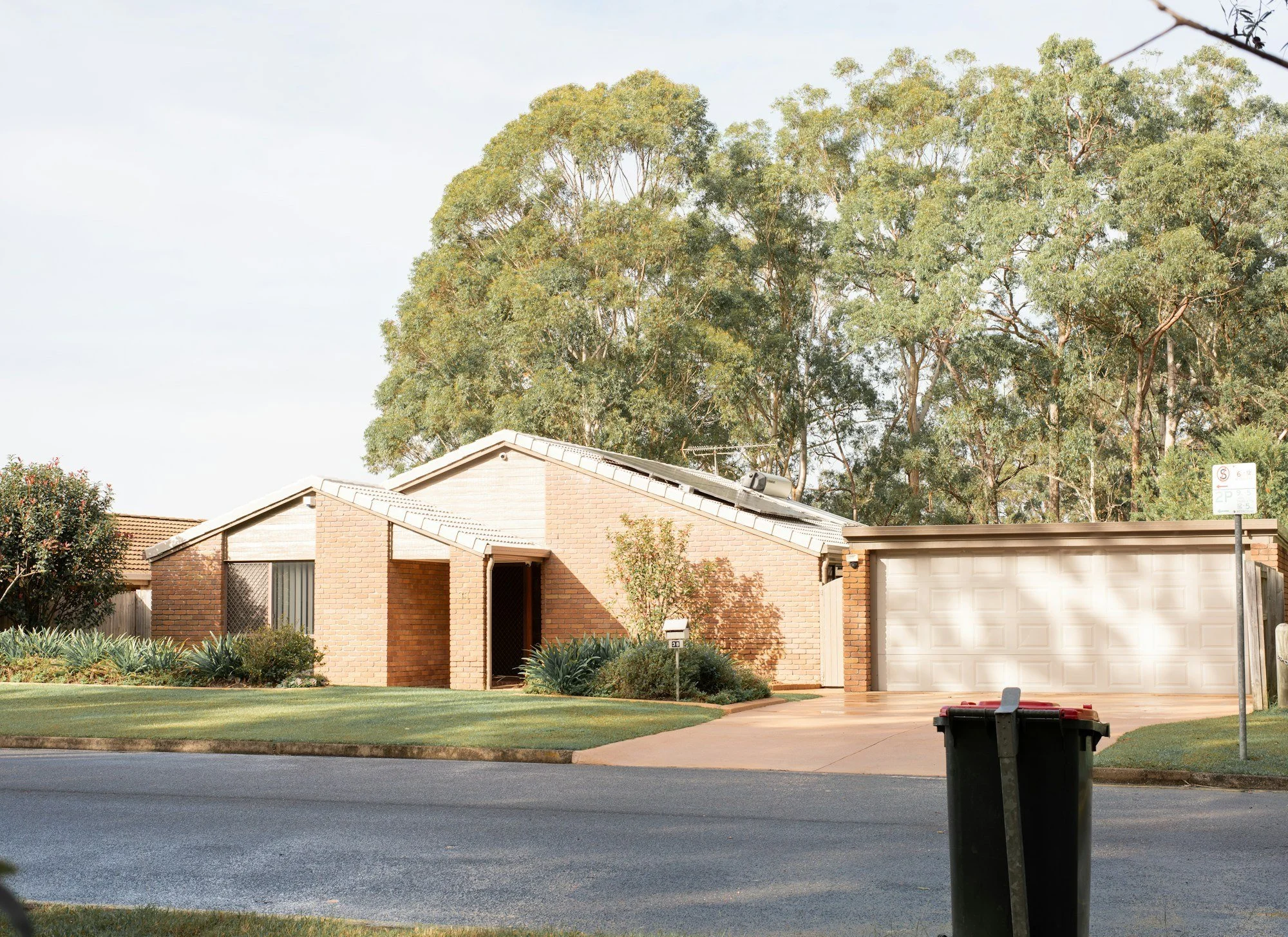
Plenty of Greater Dandenong's original houses sit on blocks with more potential than the house itself.
What changed in Greater Dandenong in 2025 and 2026
New activity centre controls. Springvale, Noble Park, Yarraman and Dandenong were included in the state government's Train and Tram Zone Activity Centres Program. The plans were finalised, and Greater Dandenong Council confirms the new controls came into effect on 22 July 2026 through Planning Scheme Amendment GC285.
New zones near the stations. Under the final Springvale to Dandenong plan, most residential land in the inner catchment moved into Housing Choice and Transport Zone 1, and most in the outer catchment into Housing Choice and Transport Zone 2. The inner catchment generally allows up to four storeys, or six on larger lots that meet set criteria. The outer catchment generally allows up to three storeys, or four on larger qualifying lots. Yarraman only has an outer catchment.
Single dwellings. Clause 54, which covers one dwelling on a lot, moved to a deemed-to-comply model on 8 September 2025 (Amendment VC282). Further refinements followed under Amendment VC315 in September 2026.
Townhouses and dual occupancy. The Townhouse and Low-Rise Code (Amendment VC267) commenced on 31 March 2025. If a development meets all the applicable Clause 55 standards, council does not need to weigh the matching decision guidelines and there is no objector right of appeal at VCAT. Neighbours can still lodge objections.
If your property is near one of the four stations, look it up on the state's activity centres interactive map before you spend anything on design. The rules inside a catchment are different from the rules a few streets away.
Which zone is your block in
Outside the station catchments, most houses in Greater Dandenong sit in one of these residential zones:
- Neighbourhood Residential Zone, Schedule 1 (NRZ1). The default limit is 9 metres and two storeys. The schedule's objectives focus on respecting existing built form, generous setbacks and ground level private open space at the side or rear of each dwelling.
- Neighbourhood Residential Zone, Schedule 2 (NRZ2), the "garden setting" areas. The schedule asks for generous setbacks and planted space between dwellings that contributes to the setting of the green wedge and Police Paddocks. If you are in Dandenong North or Noble Park North near those areas, expect council to look hard at spacing and planting.
- General Residential Zone, Schedule 1 (GRZ1). Height is capped at 11 metres and three storeys. Front fences are limited to 1.2 metres on most streets.
- General Residential Zone, Schedule 3 (GRZ3). Applied by Council around its activity centres in 2020. The minimum garden area requirement was removed and the 11 metre, three storey height limit applies.
Garden area. In the NRZ and GRZ1, a new dwelling on a lot of 400 to 500 square metres must set aside at least 25 percent as garden area, 30 percent on lots above 500 up to 650 square metres, and 35 percent above 650 square metres. This is the rule that quietly kills a lot of dual occupancy sketches, because driveways do not count toward it.
Small lots. A planning permit is required for one dwelling on a lot under 300 square metres in these zones. That matters if you are buying one half of an older subdivision.
The housing stock tells you a lot
The 2021 Census shows how differently these suburbs have developed. It is worth knowing, because it shapes what your neighbours have already done, what council is used to seeing, and what buyers compare your finished home against.
| Suburb (2021 Census) | Separate houses | Semi-detached, townhouses etc | Flats or apartments |
|---|---|---|---|
| Noble Park | 65.0% | 16.0% | 18.9% |
| Noble Park North | 89.6% | 0.9% | 9.3% |
| Dandenong North | 85.5% | 11.2% | 3.2% |
| Keysborough | 89.5% | 9.4% | 1.1% |
| Victoria | 73.4% | 13.9% | 12.1% |
Noble Park has already absorbed a lot of medium density. Noble Park North and Keysborough are still overwhelmingly detached houses. Dandenong North, where we have built for a local family, sits in between. A second dwelling is a normal thing to propose in much of Noble Park. In a street of detached homes in Noble Park North, it will stand out more and the neighbourhood character arguments will carry more weight.
Knockdown rebuild or dual occupancy on a Noble Park block
Here is how we work through it with clients. Take a hypothetical 650 square metre block in GRZ1 with an older single storey house, no overlays, and a standard 15 to 16 metre frontage.
The approval path. One new home on that block needs a building permit, with siting assessed through the building permit process. Two homes need a planning permit first. Under the Townhouse and Low-Rise Code, a design that meets every applicable Clause 55 standard has a cleaner run, but you still pay for a town planner, a full planning application and council's assessment time before the building permit stage even starts.
The garden area squeeze. At 650 square metres the minimum garden area is 30 percent, which is 195 square metres that cannot be building, driveway or most hard surfaces. Two dwellings plus a shared or separate driveway down one side eat into that fast. This is usually where a tandem dual occupancy on a narrow block becomes two cramped homes instead of two good ones.
Access and the crossover. Two dwellings often means a second or relocated crossover. Greater Dandenong requires a vehicle crossing permit, and new crossings have a minimum width of 3 metres at the building line. Street trees, power poles and drainage pits in the nature strip can decide where a crossover can go, so check this before you commit to a layout.
Height and outlook. GRZ1 allows up to three storeys, but most dual occupancy projects here are double storey. Overlooking and overshadowing standards mean rear dwellings usually need careful window placement and screening, especially where neighbours have already built units along the boundary.
What you end up with. A knockdown rebuild gives you one larger home with a proper backyard, built for your family. A dual occupancy gives you two smaller homes, each with less garden, and either an asset to sell or rent or a way to house parents or adult children next door. Neither is automatically better. The numbers and your plans for the next ten years decide it.
What we tell clients. If the block is narrow or the zone is NRZ2, start with a knockdown rebuild and do not let anyone talk you into squeezing in a second home. If the block is wide, in GRZ1 or GRZ3, and you have a real use for the second dwelling, a well-designed side-by-side dual occupancy is often worth the extra time. Our dual occupancy guide covers the block requirements in more depth, and our knockdown rebuild block checklist covers the other side.
Flooding: the local issue people underestimate
Greater Dandenong sits mostly in the Dandenong Creek catchment, with tributaries including Mile Creek, Eumemmerring Creek and Corhanwarrabul Creek. VICSES records major flooding on Dandenong Creek in 1984 and 2005, and publishes a separate local flood guide for Noble Park covering Mile Creek and Yarraman Creek.
The planning scheme uses three flood controls here: the Special Building Overlay (stormwater and overland flow), the Land Subject to Inundation Overlay (creek and open drain flooding) and, in the worst-affected land, the Urban Floodway Zone. If your property is in the SBO or LSIO, a planning permit is generally needed even for a single new house, and Melbourne Water will set a minimum floor level.
The flood level certificate. Melbourne Water issues property flood level certificates for $57.47. They can take up to 14 days and are valid for three months. The minimum floor level is generally the 1 percent AEP flood level plus a freeboard, typically 300 to 600 millimetres.
Why it matters for height. In the Neighbourhood Residential Zone, if the land is in an SBO or LSIO, building height is measured from the minimum floor level set by the drainage authority, not from natural ground. That helps, but a raised floor still changes your entry steps, your garage ramp and how the house sits against the neighbours.
Council also notes that older drainage in parts of the municipality was not designed to contain a 1 in 100 year overland flow within the road. Ask your designer to check where water goes across your block, overlay or not.

Floor levels get set early on flood-affected blocks, and getting them right saves a lot of rework later.
Council permits beyond the planning permit
Asset protection permit. Greater Dandenong requires one for building work over $10,000 and for any demolition. The current fee is $361 for a single residential project with a $4,400 bond on a single frontage lot or $8,800 on a corner lot. For two to five units the fee is $666 with the same bonds. Where demolition and construction are lodged together, two fees apply but only the larger bond. Council inspects before and after, and the bond comes back once any damage to footpaths, kerbs or drains is fixed.
Vehicle crossing permit. A non-refundable $329 fee, valid for 12 months, with construction to Council's standard drawings.
Tree protection. Under Council's Tree Protection on Private Land Local Law, you need a permit to remove any tree with a trunk diameter of 40 centimetres or more, measured 1.4 metres above the ground, unless a planning permit already covers the removal. The fee is $113 per tree. On older Noble Park and Dandenong North blocks, a large tree in the back garden can decide where a second dwelling can go.
Soil and site conditions
Do not assume the ground from the suburb name. Soil varies across the municipality, and every new home needs a soil test that gives the site a classification under AS 2870, from stable sites through the reactive clay classes to problem sites. That classification drives the slab design and a meaningful part of the cost. Our founder Sher Baloch has a structural engineering background, and footing design is something we look at closely on every job. Our guide to building on reactive clay in Melbourne explains what each class means for your build.
For current pricing ranges, see our knockdown rebuild cost guide.
Common questions
Do I need a planning permit to knock down and rebuild in Noble Park?
Usually not, if the lot is 300 square metres or more, is in the NRZ or GRZ and has no overlay that triggers a permit. You will still need building permits for demolition and construction, plus Council's asset protection permit. A flood overlay or a location inside a new activity centre catchment can change this, so check your property first.
Can I build two houses on my block in Greater Dandenong?
Often yes, but it always needs a planning permit. The practical limits are the minimum garden area, access and parking, setbacks and overlooking. A wide block in GRZ1 or GRZ3 is usually a better candidate than a narrow block in a Neighbourhood Residential Zone.
How high can I build in Noble Park?
In the Neighbourhood Residential Zone the default is 9 metres and two storeys. In the General Residential Zone it is 11 metres and three storeys. Inside the new Noble Park activity centre catchment, the Housing Choice and Transport Zone generally allows three to four storeys, and up to six on larger qualifying lots in the inner catchment.
Is Noble Park prone to flooding?
Parts of it are. VICSES publishes a Noble Park local flood guide covering Mile Creek and Yarraman Creek, and flash flooding can occur when stormwater drains are overwhelmed. Check the planning scheme for a Special Building Overlay or Land Subject to Inundation Overlay and request a flood level certificate from Melbourne Water if one applies.
Do I need a permit to remove a tree in Greater Dandenong?
Yes, if the trunk is 40 centimetres or more in diameter measured 1.4 metres above the ground, unless a planning permit already covers it. The Council fee is $113 per tree. Raise any large trees with your builder early, because they affect demolition access as well as the design.
The local view
Greater Dandenong rewards people who do their homework before they commit to a design. The zone, the flood overlay, the new activity centre catchments and the tree on the back fence will decide more about your project than any floor plan brochure.
We build across Melbourne's south east, and Noble Park is home for us. We have built for families in Dandenong North, Rowville, Wheelers Hill and Clarinda, and you can see finished work on our projects page. If you want an honest read on whether your block suits a knockdown rebuild or a dual occupancy, book a consultation or come and see us at K Studio on Princes Highway, by appointment.
Sources
- Springvale to Dandenong activity centres, Department of Transport and Planning
- Train and Tram Zone Activity Centres Program, Greater Dandenong Council
- Clause 32.09 Neighbourhood Residential Zone, Greater Dandenong Planning Scheme
- Townhouse and Low-Rise Code, Department of Transport and Planning
- Greater Dandenong flood guides, VICSES
- Property flood level certificate, Melbourne Water
- Asset Protection Permits, Greater Dandenong Council
- 2021 Census QuickStats: Noble Park, Australian Bureau of Statistics
